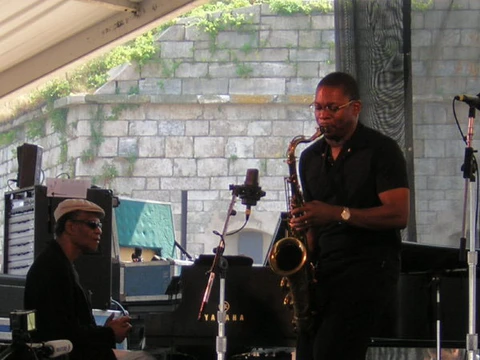
Benny Carter
American jazz singer known for her improvisational technique, scatting, and complex musical abilities.

Betty Carter (born Lillie Mae Jones; May 16, 1929 – September 26, 1998) was an American jazz singer known for her improvisational technique, scatting and other complex musical abilities that demonstrated her vocal talent and imaginative interpretation of lyrics and melodies. Vocalist Carmen McRae once remarked: "There's really only one jazz singer—only one: Betty Carter."
- born
- May 16, 1929
- died
- September 26, 1998
- field
- Jazz singer
- nationality
- American
- known_for
- Improvisational technique, scatting, and complex musical abilities
Verified Timeline
Lore & Background
Carter was born in Flint, Michigan, and grew up in Detroit, where her father, James Jones, was the musical director of a Detroit church and her mother, Bessie, was a housewife. As a child, Carter was raised to be extremely independent and to not expect nurturing from her family. Even 30 years after leaving home, Carter was still very aware of and affected by the home life she was raised in, and was quoted saying: "I have been far removed from my immediate family. There's been no real contact or phone calls home every week to find out how everybody is...As far as family is concerned, it's been a lonesome trek...It's probably just as much my fault as it is theirs, and I can't blame anybody for it. But there was...no real closeness, where the family urged me on, or said...'We're proud'...and all that. No, no...none of that happened." She studied piano at the Detroit Conservatory of Music at the age of 15, but only attained a modest level of expertise. At the age of 16, Carter began singing. As her parents were not big proponents of her pursuing a singing career, she would sneak out at night to audition for amateur shows. After winning first place at her first amateur competition, Carter felt as though she were being accepted into the music world and decided that she must pursue it tirelessly. When she began performing live, she was too young to be admitted into bars, so she obtained a forged birth certificate to gain entry in order to perform.
Reader's Guide
Even at a young age, Carter was able to bring a new vocal style to jazz. The breathiness of her voice was a characteristic seldom heard before her appearance on the music scene. She also was well known for her passion for scat singing and her strong belief that the throwaway attitude that most jazz musicians approached it with was inappropriate and wasteful. Her scatting was known to display a degree of spontaneity and basic inventiveness that was seldom seen elsewhere. Detroit, where Carter grew up, was a hotbed of jazz growth. After signing with a talent agent after her win at amateur night, Carter had opportunities to perform with famous jazz artists such as Dizzy Gillespie, who visited Detroit for an extensive amount of time. Gillespie is often considered responsible for her strong passion for scatting. In earlier recordings, it is apparent that her scatting had similarities to the qualities of Gillespie's. At the time of Gillespie's visit, Charlie Parker was receiving treatment in a psychiatric hospital, delaying her encounter with him. However, Carter eventually performed with Parker, as well as with his band consisting of Tommy Potter, Max Roach, and Miles Davis. After receiving praise from both Gillespie and Parker for her vocal prowess, Carter felt an upsurge in confidence and knew that she could make it in the business with perseverance.
Did You Know?
- Carmen McRae once said: "There's really only one jazz singer—only one: Betty Carter."
- Carter's father, James Jones, was the musical director of a Detroit church, and her mother, Bessie, was a housewife.
- She studied piano at the Detroit Conservatory of Music at age 15 but only attained a modest level of expertise.
- To perform in bars at age 16, Carter obtained a forged birth certificate to gain entry.
- Lionel Hampton's wife Gladys gave her the nickname "Betty Bebop," a nickname she reportedly detested.
A Lonesome Trek: Self-Made Beginnings in Detroit
Born Lillie Mae Jones in Flint, Michigan, in 1929, Carter grew up in Detroit under a household that offered little emotional warmth. Her father James served as a church musical director while her mother Bessie managed the home, yet the family dynamic left her feeling untethered. Decades later she still described her upbringing as a "lonesome trek," acknowledging the absence of encouragement or pride from those closest to her. That void, however, forged an extraordinary self-reliance. At fifteen she enrolled at the Detroit Conservatory of Music to study piano, though she never reached a high level of mastery. It was at sixteen that singing consumed her. With her parents unsupportive of a musical career, she slipped out at night to audition for amateur competitions. Winning first place at her very first contest ignited an unshakeable conviction that she belonged in the world of music. When she began performing live, her youth barred her from entering bars, so she carried a forged birth certificate to slip past the door. Every barrier she faced became fuel rather than a stop sign.
Breath, Scat, and a New Philosophy of Improvisation
Carter arrived on the jazz scene with a vocal quality that had no real precedent: a distinctive breathiness that set her apart from every singer who had come before. Beyond that timbre, she brought a philosophy to scat singing that most of her peers did not share. Where many jazz musicians treated scat as a casual, throwaway embellishment, Carter regarded it as a serious creative act demanding full invention and spontaneity. Her improvisations displayed a level of basic inventiveness rarely encountered in the genre. Detroit, her hometown, was a fertile ground for jazz, and it was there that Dizzy Gillespie spent extended periods performing. His presence left a visible imprint on her early scatting, and she often credited him with igniting her deep passion for the art form. When she eventually performed alongside Charlie Parker and his ensemble—featuring Tommy Potter, Max Roach, and Miles Davis—both Gillespie and Parker praised her vocal command. That dual endorsement from two titans of bebop crystallized her belief that she could sustain a career through sheer perseverance.
Seven Firings: The Hampton Orchestra Years
In 1948, Lionel Hampton extended an invitation that changed Carter's trajectory: join his orchestra. It was her big break, placing her among the last generation of jazz singers to work within the big band framework. Hampton, a man with a keen ear for talent and a love for bebop, surrounded himself with players like Charles Mingus, Wes Montgomery, and Ernest Harold Bailey. Hampton's wife Gladys dubbed her "Betty Bebop," a nickname Carter loathed. The partnership was fraught with tension. Carter was fiercely independent and openly resented Hampton's swing aesthetic, refusing to sing in a swinging manner. She was too outspoken for his comfort, and Hampton, quick-tempered and insistent on his authority as bandleader, clashed with her repeatedly. Her growing scat improvisations on tour further irritated him. Over two and a half years, he dismissed her seven times. Yet the experience left indelible marks: professional connections, a broadened musical vocabulary, and a permanent imprint of Hampton's guidance on every attitude she would later bring to her own work. She also performed with the orchestra at the Cavalcade of Jazz in Los Angeles and San Diego in 1949, and again in 1950, where as many as 16,000 attendees filled the venue.
Paying Dues in New York and the South
By 1951, Carter had left Hampton's band and returned briefly to Detroit before heading to New York City, where she would spend the better part of the early 1950s working venues across the city. She also undertook an extensive tour of the South, playing what she called "camp shows." The pay was minimal or nonexistent, but Carter viewed the grueling schedule as essential to her growth as an artist—a way to pay her dues. Almost immediately upon arriving in New York, she was granted the opportunity to record with King Pleasure and the Ray Bryant Trio, a session that raised her profile and made her name more recognizable in the jazz community. That visibility led to an invitation to perform at the Apollo Theatre, a stage long associated with launching up-and-coming artists into national prominence. The nickname "The Kid," bestowed on her during the Hampton years, stuck with her for the rest of her life. Through these formative years, Carter transformed from a talented teenager sneaking into bars with a forged ID into a recognized force in American jazz—one that Carmen McRae would later single out as the only jazz singer who truly mattered.
Frequently Asked Questions
Who is Benny Carter?
Benny Carter was an American jazz musician, composer, and arranger born in New York City in 1907. He is best remembered as a pioneering alto saxophonist who worked alongside Johnny Hodges, as well as a versatile performer on clarinet and trumpet. Over his lifetime he also led his own bands and wrote charts that helped define the swing style.
What instruments did Benny Carter play?
Carter performed professionally on alto saxophone, clarinet, and trumpet, making him a rare multi-instrumentalist in the jazz world. The alto sax is the instrument most closely tied to his legacy, where he helped establish its expressive voice in the 1920s.
How long did Benny Carter's career last?
His professional activity ran from the early 1920s all the way into the 1990s, spanning roughly eight decades. That extraordinary longevity made him one of the longest continuously active figures in American jazz history.
Why is Benny Carter considered important to jazz?
His early arranging work for Fletcher Henderson's big band in the 1920s helped lay the harmonic and structural groundwork for what became swing. Paired with his pioneering alto saxophone playing and decades of bandleading, his influence touches nearly every major era of jazz.
When and where did Benny Carter die?
Carter died on July 12, 2003, in Los Angeles, California. He was 95 years old, having lived through virtually the entire history of recorded jazz.
More in Jazz Innovators 1-19
Related in Jazz Innovators
Links follow this subject's own source article.
Spotted an error? Know more?
This is a living reference — every entry is fact-audited, and reader corrections feed straight into our audit queue. Suggest an edit · See this site's audit record