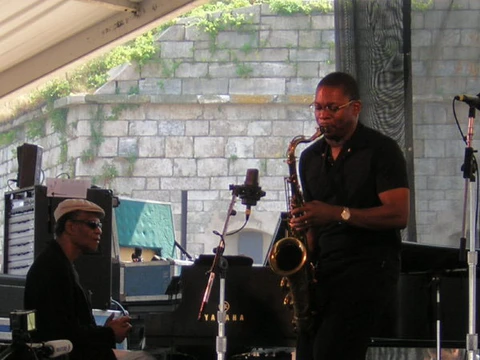
Earl Hines
Jazz pianist and bandleader who pioneered a melodic, horn-like piano style and influenced a generation of swing-era pianists.

Earl Hines was a jazz pianist and bandleader whose work with Louis Armstrong in 1927 and his own big band at Chicago's Grand Terrace Cafe helped shape the swing style. His melodic, horn-like approach to the piano and his daring rhythmic innovations—accenting lead-in notes, mixing meters, and using sudden stops—set him apart from his contemporaries. Hines' style became a seminal influence on swing-era pianists including Teddy Wilson, Art Tatum, Jess Stacy, Nat "King" Cole, Erroll Garner, Mary Lou Williams, and Jay McShann. He is recognized as one of the great big band leaders of the swing era.
- field
- Jazz pianist and bandleader
- known_for
- Influential jazz piano style; big band leader at Chicago's Grand Terrace Cafe; r
Lore & Background
Earl Hines worked with pianist Earl Hines, who had a similar impact on his instrument as Armstrong had on trumpet. Hines' melodic, horn-like conception of playing deviated from the contemporary conventions in jazz piano centered on building rhythmic patterns around "pivot notes." His approaches to rhythm and phrasing were also free and daring, exploring ideas that would define swing playing. His approach to rhythm often used accents on the lead-in instead of the main beat, and mixed meters, to build a sense of anticipation to the rhythm and make his playing swing. He also used "stops" or musical silences to build tension in his phrasing. Hines' style was a seminal influence on the styles of swing-era pianists Teddy Wilson, Art Tatum, Jess Stacy, Nat "King" Cole, Erroll Garner, Mary Lou Williams, and Jay McShann. In 1927 Armstrong worked with pianist Earl Hines. Starting in 1928, the Earl Hines Orchestra was broadcast throughout much of the Midwest from the Grand Terrace Cafe in Chicago, where Hines had the opportunity to expound upon his new approaches to rhythm and phrasing with a big band. Hines' arranger Jimmy Mundy would later contribute to the catalog of the Benny Goodman Orchestra. Big band leaders of the swing era include Benny Goodman, Duke Ellington, Count Basie, Jimmie Lunceford, Cab Calloway, Benny Carter, Jimmy Dorsey, Tommy Dorsey, Earl Hines, Bunny Berigan, Harry James, Lionel Hampton, Glenn Miller, and Artie Shaw.
Reader's Guide
Earl Hines is a key figure in the development of swing music. His piano style broke from the conventions of his time: instead of building patterns around pivot notes, he played with a melodic, horn-like conception. He accented lead-in notes, mixed meters, and used sudden stops to create tension and make his playing swing. This approach was a seminal influence on later swing-era pianists such as Teddy Wilson, Art Tatum, Jess Stacy, Nat "King" Cole, Erroll Garner, Mary Lou Williams, and Jay McShann. In 1927, he collaborated with Louis Armstrong, and from 1928 he led his own big band at Chicago's Grand Terrace Cafe, where his orchestra was broadcast throughout the Midwest. Hines is listed among the major big band leaders of the swing era, alongside Benny Goodman, Duke Ellington, Count Basie, and others.
Did You Know?
- Earl Hines' arranger Jimmy Mundy later contributed to the catalog of the Benny Goodman Orchestra.
- Starting in 1928, the Earl Hines Orchestra was broadcast throughout much of the Midwest from the Grand Terrace Cafe in Chicago.
- Hines used 'stops' or musical silences to build tension in his phrasing.
- Hines' style was a seminal influence on swing-era pianists including Teddy Wilson, Art Tatum, and Nat 'King' Cole.
A New Voice for the Piano
Earl Hines' melodic, horn-like conception of playing deviated from the contemporary conventions in jazz piano centered on building rhythmic patterns around "pivot notes." His approaches to rhythm and phrasing were free and daring, exploring ideas that would define swing playing.
Rhythm as Drama
Hines' approach to rhythm often used accents on the lead-in instead of the main beat, and mixed meters, to build a sense of anticipation to the rhythm and make his playing swing. He also used "stops" or musical silences to build tension in his phrasing.
The 1927 Partnership with Louis Armstrong
In 1927 Armstrong worked with pianist Earl Hines, who had a similar impact on his instrument as Armstrong had on trumpet.
A Seminal Influence on a Generation of Pianists
Hines' style was a seminal influence on the styles of swing-era pianists Teddy Wilson, Art Tatum, Jess Stacy, Nat "King" Cole, Erroll Garner, Mary Lou Williams, and Jay McShann. Big band leaders of the swing era include Earl Hines.
Frequently Asked Questions
Who is Earl Hines?
Earl Kenneth Hines (1903–1983), nicknamed "Fatha," was an American jazz pianist and bandleader born in LaFayette, Indiana. He is widely regarded as one of the very few pianists whose playing fundamentally redirected the trajectory of jazz as a whole.
What made Earl Hines's piano style so influential?
Hines developed a powerful, rhythmically driving approach that paired a commanding right-hand melody with strong left-hand bass patterns, giving the piano a lead-voice role rather than a purely accompaniment one. That shift helped lay the groundwork for the more harmonically adventurous piano language that would later define bebop.
What was Earl Hines's connection to Louis Armstrong?
Hines sat at the piano for some of Armstrong's most important early recordings in the 1920s, supplying a rhythmic and harmonic bed that let the trumpeter's improvisations shine. Their partnership became a defining sound of the hot-jazz era.
What was Earl Hines's big band at the Grand Terrace Cafe?
In the mid-1930s Hines led a big band out of Chicago's Grand Terrace Cafe, where he arranged and performed a blend of swing and his own driving piano style. The ensemble made him a major figure in the Chicago scene and broadened his reach well beyond the small-combo setting.
Why do jazz fans consider Earl Hines a pivotal innovator?
Musicians and critics credit Hines with transforming the piano from a supporting rhythm instrument into a true solo voice in jazz ensembles. Nearly every major jazz pianist who came after him—whether in stride, bebop, or post-bop—owes a measurable debt to the techniques and phrasing Hines pioneered.
More in Jazz Innovators 1-19
Related in Jazz Innovators
Links follow this subject's own source article.
Spotted an error? Know more?
This is a living reference — every entry is fact-audited, and reader corrections feed straight into our audit queue. Suggest an edit · See this site's audit record