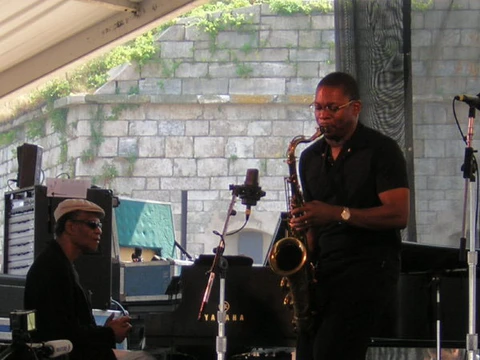
Chick Corea
American jazz pianist, composer, and bandleader; key figure in jazz fusion.

Armando Anthony "Chick" Corea (June 12, 1941 – February 9, 2021) was an American jazz pianist, composer, bandleader, and occasional percussionist. Along with McCoy Tyner, Herbie Hancock and Keith Jarrett, Corea is considered one of the foremost pianists of the post-John Coltrane era. His compositions "Spain", "500 Miles High", "La Fiesta", "Armando's Rhumba", and "Windows" are considered jazz standards. He won 29 Grammy Awards and has been nominated for the award 79 times.
- born
- June 12, 1941
- died
- February 9, 2021
- field
- Jazz pianist, composer, bandleader, occasional percussionist
- nationality
- American
- known_for
- Compositions including "Spain", "500 Miles High", "La Fiesta", "Armando's Rhumba
Verified Timeline
Lore & Background
Chick Corea was born in Chelsea, Massachusetts, to parents Anna and Armando J. Corea. His father, a trumpeter who led a Dixieland band in Boston in the 1930s and 1940s, introduced him to the piano at age four. Surrounded by jazz, he was influenced early by bebop and musicians such as Dizzy Gillespie, Charlie Parker, Bud Powell, Horace Silver, and Lester Young. He came into possession of a drumset at age 11, and would occasionally play drums for the rest of his career. At age eight, he began formal piano lessons with Italian concert pianist Salvatore Sullo, who taught him classical piano. Corea later studied at Columbia University and the Juilliard School before dropping out to play gigs. Corea began his professional recording and touring career in the early 1960s with Mongo Santamaria, Willie Bobo, Blue Mitchell, Herbie Mann, and Stan Getz. In 1966, he recorded his debut album, Tones for Joan's Bones. In March 1968, he recorded the highly regarded trio album Now He Sings, Now He Sobs with drummer Roy Haynes and bassist Miroslav Vitouš. In the fall of 1968, Corea began recording and touring with Miles Davis, appearing on the widely praised Davis studio albums Filles de Kilimanjaro, In a Silent Way, Bitches Brew, and On the Corner. He left Davis's band shortly after its performance at the 1970 Isle of Wight Festival. With bassist Dave Holland, Corea formed the group Circle with multireedist Anthony Braxton and drummer Barry Altschul, active from 1970 to 1971. In 1971, at the behest of ECM producer Manfred Eicher, he began playing solo piano, recording the sessions that became Piano Improvisations Vol. 1 and Piano Improvisations Vol. 2. In 1972, Corea formed Return to Forever, a band that combined acoustic and electronic instrumentation and initially drew on Hispanic music styles. The group included Flora Purim, Joe Farrell, Airto, and Stanley Clarke. Later versions featured Lenny White, Bill Connors, and Al Di Meola. Corea also collaborated extensively in duet projects with Gary Burton (recording Crystal Silence in 1972), Herbie Hancock, Friedrich Gulda (The Meeting, 1982), Béla Fleck (The Enchantment, 2007), and Hiromi Uehara (Duet, 2008). He won 29 Grammy Awards and was nominated 79 times.
Reader's Guide
Chick Corea's significance lies in his central role in the birth of jazz fusion as a member of Miles Davis's band in the late 1960s, and as the founder of Return to Forever in the 1970s. His compositions, such as "Spain", "500 Miles High", "La Fiesta", "Armando's Rhumba", and "Windows", are considered jazz standards. Corea's career spanned six decades, during which he explored a wide range of styles—from bebop and Latin jazz to classical and electronic music—while maintaining a consistent output of acclaimed recordings. His duet projects with pianists like Herbie Hancock and vibraphonist Gary Burton demonstrated his versatility and collaborative spirit. Corea's 29 Grammy Awards reflect his sustained influence and recognition within the jazz community. He also founded his own label, Stretch Records, in 1992, and continued to record and tour until his death in 2021. His legacy endures through his extensive discography and the many musicians he influenced.
Did You Know?
- Corea came into possession of a drumset at age 11 and would occasionally play drums for the rest of his career.
- His father, a trumpeter, led a Dixieland band in Boston in the 1930s and 1940s.
- Corea's first piano teacher, Salvatore Sullo, was an Italian concert pianist who taught him classical piano, not jazz.
- He recorded the trio album Now He Sings, Now He Sobs in March 1968 with drummer Roy Haynes and bassist Miroslav Vitouš.
- Corea founded his own record label, Stretch Records, in 1992.
Frequently Asked Questions
Who is Chick Corea?
Chick Corea was an American jazz pianist, composer, and bandleader born in Chicago on June 12, 1941. He is widely regarded as one of the most important pianists of the post-Coltrane era, often grouped alongside McCoy Tyner, Herbie Hancock, and Keith Jarrett.
What are Chick Corea's most famous compositions?
Pieces such as "Spain," "500 Miles High," "La Fiesta," "Armando's Rhumba," and "Windows" have become enduring jazz standards. They showcase his signature blend of Latin rhythmic feel, modal harmony, and adventurous melodic writing.
Did Chick Corea play with Miles Davis?
Yes, Corea joined Miles Davis's ensemble in the late 1960s, a period when Davis was pushing the music toward electric and fusion territory. That experience sharpened his sense of rhythmic drive and textural layering before he went on to lead his own groups.
What is Return to Forever?
Return to Forever was the groundbreaking jazz-fusion ensemble that Corea founded in the early 1970s. The group married complex harmonic structures with rock-level energy and Latin grooves, helping to define the fusion movement for a generation of listeners.
When did Chick Corea die?
Corea passed away on February 9, 2021, at the age of 79. His death closed a career that spanned more than five decades of influential work across jazz, fusion, and world-music collaborations.
More in Jazz Innovators 1-19
Spotted an error? Know more?
This is a living reference — every entry is fact-audited, and reader corrections feed straight into our audit queue. Suggest an edit · See this site's audit record